A Google Antigravity agent that plans and builds on its own can build the wrong thing on its own
Agent-first development environments like Google Antigravity change who does the work. Instead of suggesting a line of code, the agent plans the task, edits several files and reports back. That’s a big productivity lever on a StoreConnect project, and a big risk if the agent’s understanding of the platform is wrong from the first step. An autonomous agent working from bad assumptions doesn’t make one mistake. It makes a plan full of them.
The StoreConnect package for Antigravity gives the agent the platform rules before it starts planning.
Get the skills plugin or watch the full demo.
Agents without the right context add complexity instead of removing it
IT leaders are already seeing this. In MuleSoft’s 2026 Connectivity Benchmark, 86% agreed that without proper integration, AI agents can introduce more complexity rather than value, and half of all AI agents currently operate in silos1.
An Antigravity agent with StoreConnect’s skills isn’t working in a silo. It knows how themes override the base theme by key, what order records need to be created in and which work belongs in a template versus in Salesforce. Its plans start from how the platform works, not from how a generic platform might.
Project knowledge that lives in one person’s head doesn’t scale
On a client or implementation project, the platform conventions need to stay with the project, not with whichever developer happens to be on it. When that knowledge walks out the door, the next agent session starts from scratch.
For Antigravity 2.0 and Antigravity IDE, the skills install at workspace scope, and StoreConnect supplies a project context file for the repository root2. The conventions travel with the project, so every agent session on it, and every developer who joins it, starts from the same ground rules.
Autonomy without an approval step is how bad changes go live
The more an agent can do on its own, the more the final approval matters. Google Cloud’s 2024 DORA research found increased AI adoption was associated with a 7.2% drop in delivery stability3, and IBM found 97% of organizations with an AI-related breach lacked proper AI access controls4.
StoreConnect keeps a person in the loop. When the agent connects to a store, it signs in as you with your permissions, and its write actions land in the same staged review flow your team already uses5. It can plan and prepare as much as you like. Nothing reaches the live store until someone approves it.
Let the agent plan, with the right rules and the final say still yours
Autonomous agents are only as good as what they know when they start.
Get the skills plugin. Install the native plugin for Antigravity CLI, or add the skills at workspace scope for Antigravity 2.0 and IDE. Installing it connects no store and includes no credentials.
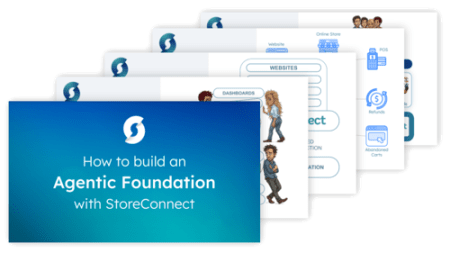
Watch the full demo. CEO Mikel Lindsaar shows an agent connected to a live store and the approval flow every change passes through, so you can see where the human stays in control.
References
-
MuleSoft, “Agentic transformation reaches new heights: 2026 Connectivity Benchmark Report insights.” ↩
-
StoreConnect, “StoreConnect AI” GitHub repository (README, skills and provider packages). ↩
-
Google Cloud DORA, “2024 Accelerate State of DevOps Report,” as reported by InfoQ. ↩
-
IBM, “Cost of a Data Breach Report 2025” newsroom release (research conducted by Ponemon Institute). ↩